High Efficiency (Tunnel Oxide Passivated Contact) cells reduce recombination losses in the contact regions thanks to an ultra-thin tunnel oxide and a doped poly-silicon layer, and convert solar energy into electricity with high conversion efficiency.


N-Type High Efficiency Solar Cells
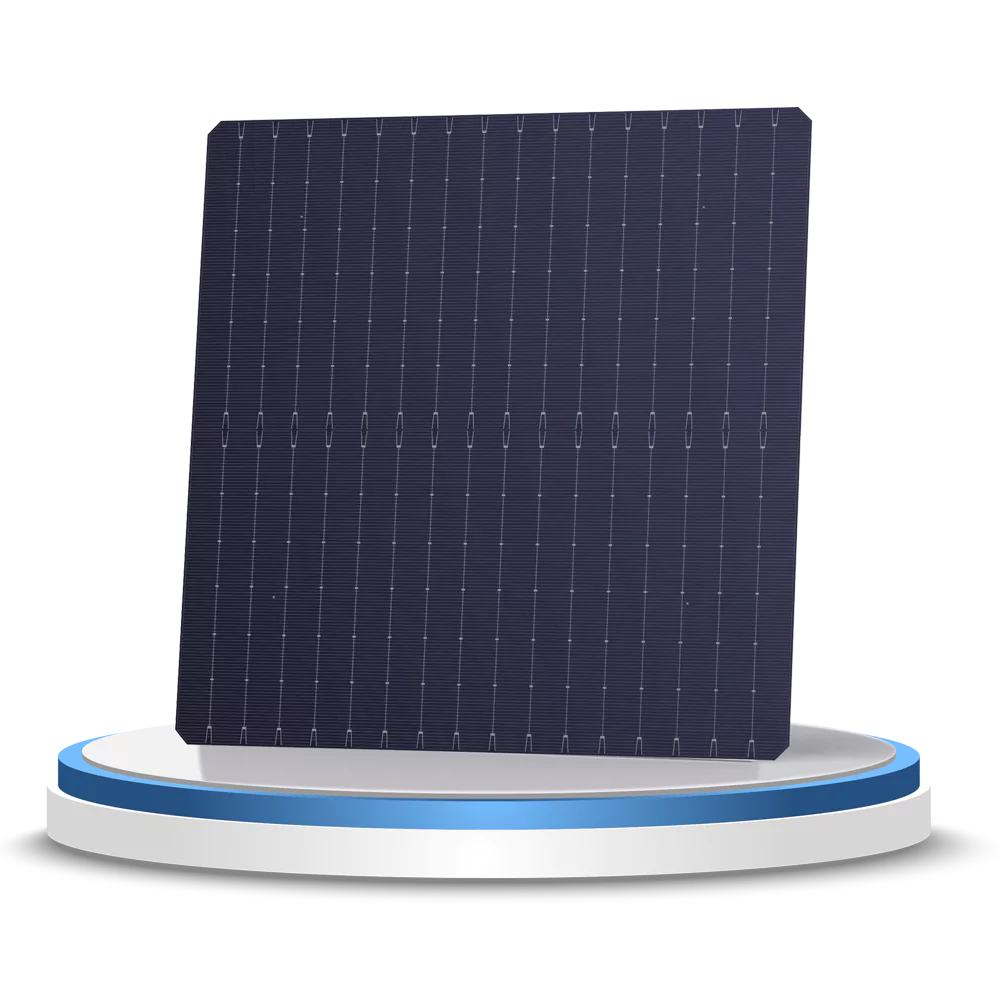
N-Type High Efficiency M10R 16BB Solar Cell
| Dimension | 182.2mm*183.75mm±0.5mm ,Φ256mm±0.5mm |
| Thickness (Cell) | 130μm±20μm / -10μm |
| Front Side (−) | 16 busbars (silver), silver width 0,03 ± 0,05 fingers; 192 Fingers, dark blue anti-reflective coating (SiNₓ) |
| Back Side (+) | 16 busbars (silver), silver width 0,03 ± 0,05 fingers; 200 Fingers, dark blue anti-reflective coating (SiNₓ) |
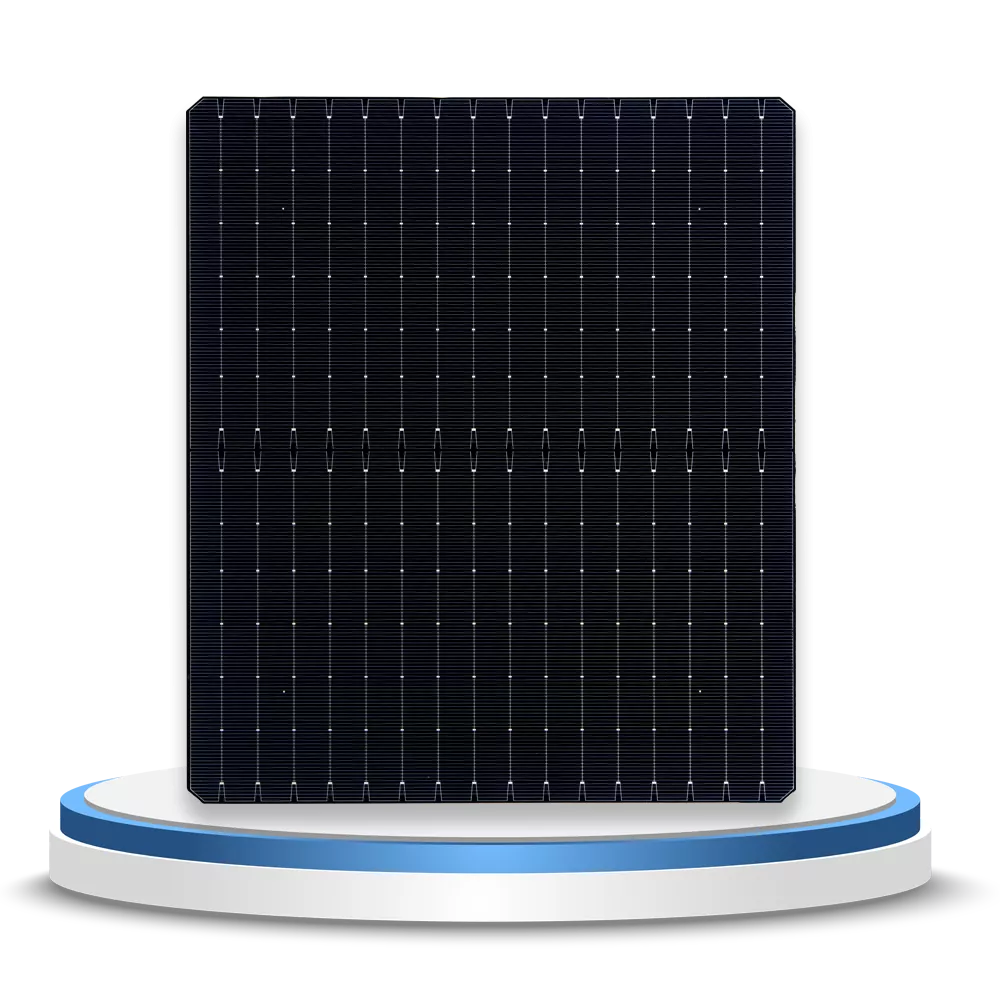
N-Type High Efficiency G12R 16BB Solar Cell
| Dimension | 182.3mm x 210mm ±0.5mm |
| Thickness (Cell) | 130μm±20μm |
| Front Side (−) | 16 busbars (silver), width 0,03 ± 0,02 mm; 210 silver fingers; dark blue anti-reflective coating (SiNₓ) |
| Back Side (+) | 16 busbars (silver), width 0,03 ± 0,02 mm; 228 silver fingers; dark blue anti-reflective coating (SiNₓ) |


Advanced Surface Passivation
-
In High Efficiency cells, an ultra-thin tunnel oxide and a doped poly-silicon layer enable selective carrier transport while reducing surface recombination. This increases the open-circuit voltage (Voc) and cell efficiency.

LID Reduction
-
n-type silicon is not susceptible to the boron–oxygen-related light-induced degradation (LID) seen in p-type cells; therefore, initial light-induced degradation is very low in High Efficiency cells. This contributes to stable long-term performance.

High Performance in Low Irradiance
-
High Efficiency cells provide stable energy generation by reducing efficiency loss under low-irradiance conditions.

Temperature Performance
-
High Efficiency cells have a low power temperature coefficient (Pmax), which reduces power loss at high operating temperatures and supports efficient operation in hot climates

High Durability
-
With their structure resistant to moisture, temperature and mechanical stress, High Efficiency cells provide long-term performance within the module and contribute to system reliability.

Environmental Sustainability
-
High Efficiency cells are designed to enable the sustainable use of solar energy. Their efficiency allows for more energy production in less space, while their long lifespan reduces waste and lowers the carbon footprint, reducing environmental impact.

Cost Efficiency
-
High efficiency lowers system cost (BOS) and levelized cost of energy (LCOE) by generating more energy per unit area, and shortens the payback period of the investment.