High Efficiency (Tunnel Oxide Passivated Contact) cells reduce recombination losses in the contact regions thanks to an ultra-thin tunnel oxide and a doped poly-silicon layer, and convert solar energy into electricity with high conversion efficiency.


N-Type High Efficiency M10R 16BB Solar Cell
| Dimension | 182.2mm*183.75mm±0.5mm ,Φ256mm±0.5mm |
| Thickness (Cell) | 130μm±20μm / -10μm |
| Front Side (−) | 16 busbars (silver), silver width 0,03 ± 0,05 fingers; 192 Fingers, dark blue anti-reflective coating (SiNₓ) |
| Back Side (+) | 16 busbars (silver), silver width 0,03 ± 0,05 fingers; 200 Fingers, dark blue anti-reflective coating (SiNₓ) |

N-Type High Efficiency G12R 16BB Solar Cell
| Dimension | 182.3mm x 210mm ±0.5mm |
| Thickness (Cell) | 130μm±20μm |
| Front Side (−) | 16 busbars (silver), width 0,03 ± 0,02 mm; 210 silver fingers; dark blue anti-reflective coating (SiNₓ) |
| Back Side (+) | 16 busbars (silver), width 0,03 ± 0,02 mm; 228 silver fingers; dark blue anti-reflective coating (SiNₓ) |
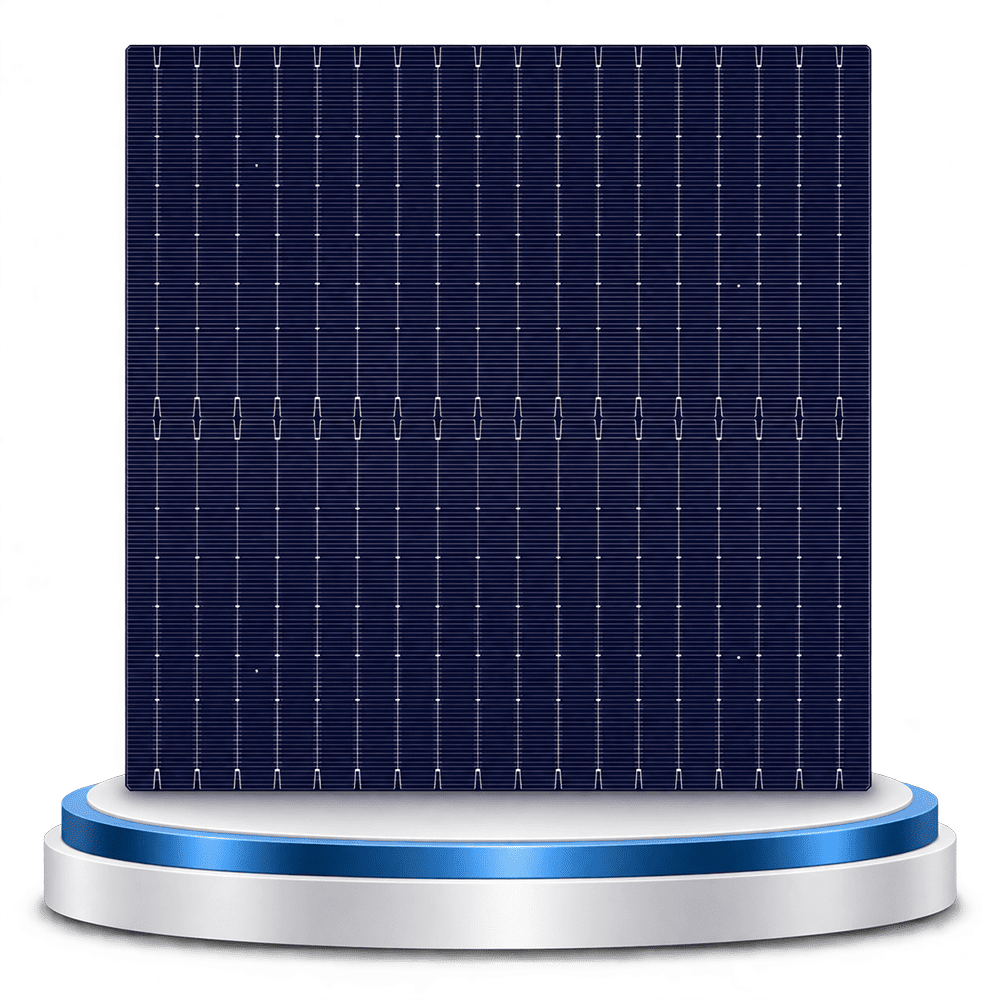
P-Type PERC G12R 18BB Solar Cell
| Dimension | 210mm x 210mm ±0.25mm, Φ295mm±0.5mm |
| Thickness (Cell) | 165µm±17.5µm |
| Front Side (−) | 18 busbars, width 0.07 ± 0.05 mm, pitch 11.29 ± 0.15 mm; 198 fingers; silicon oxide + blue silicon nitride compound anti-reflection coating (PID free); half-cut design |
| Back Side (+) | 18 busbars, width 1.1/2.5 ± 0.3 mm; 198 Al fingers; 14 Ag electrode sections; passivation layer (AlOx and SiNx), rear contact (Al) |
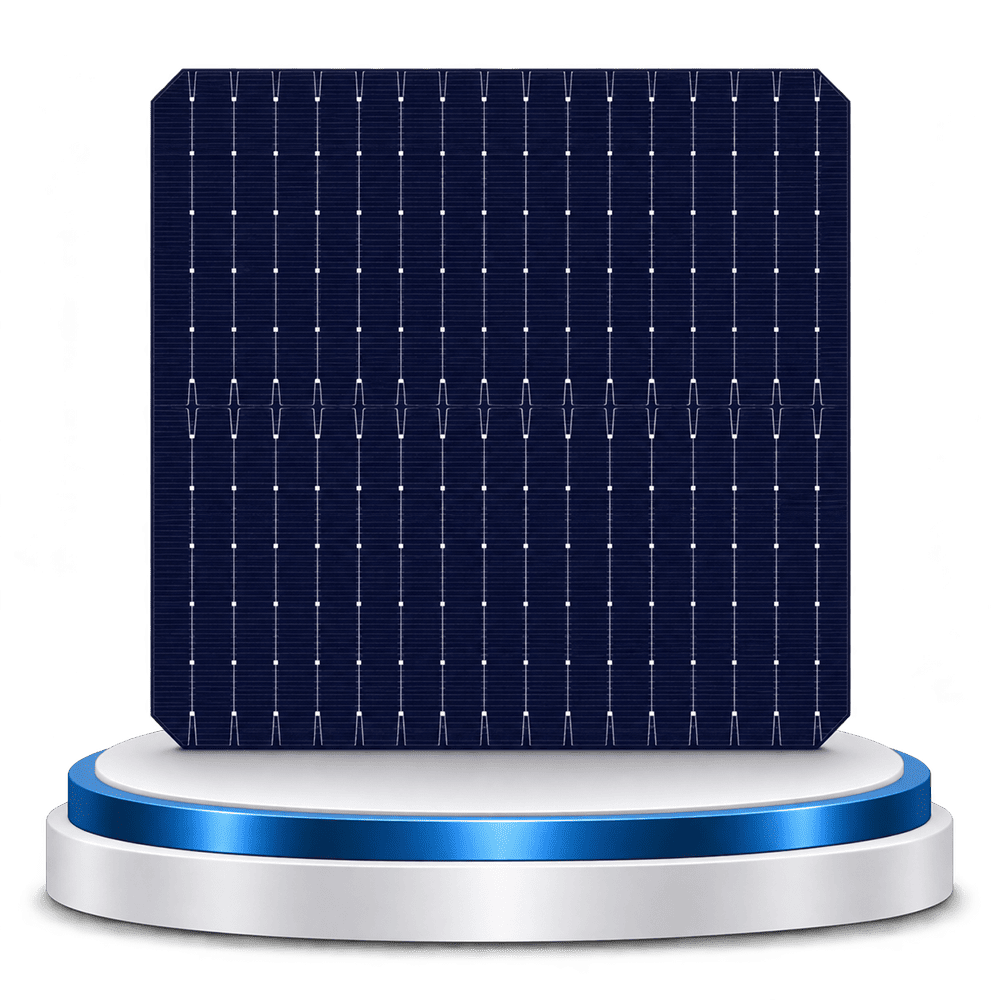
P-Type PERC M10 16BB Solar Cell
| Dimension | 182.2mm x 183.75mm ±0.25mm, Φ256mm±0.5mm |
| Thickness (Cell) | 165µm±17.5µm |
| Front Side (−) | 16 busbars, pitch 9.66 ± 0.15 mm; 172 fingers; silicon oxide + blue silicon nitride compound anti-reflection coating (PID free); half-cut design |
| Back Side (+) | 16 busbars, width 2.7 ± 0.3 mm; 180 Al fingers; 12 Ag electrode sections; passivation layer (AlOx and SiNx), rear contact (Al) |
CW SolarCell provides FEOC compliant and traceable solar cells for its projects, enabling customers to confidently integrate high-efficiency solar cell technologies while meeting applicable regulatory configurations benefiting from eligible local incentives and support programs.
Manufactured in accordance with stringent production and quality standards, CW SolarCell products are included in the Bills of Materials (BOMs) of approved product configurations recognized by the Approved Vendor Lists (AVLs) of leading manufacturers and large-scale project developers. This demonstrates that CW SolarCell products have undergone rigorous technical qualification and supply chain reliability assessments, reinforcing the company\'s position as a trusted and preferred supplier in the global solar energy market.
Through its FEOC compliant and traceable manufacturing capabilities, CW Enerji delivers end-to-end solutions, from solar cells to finished modules, providing customers with reliable, flexible, and sustainable options throughout the procurement and sales process.


Advanced Surface Passivation
-
In High Efficiency cells, an ultra-thin tunnel oxide and a doped poly-silicon layer enable selective carrier transport while reducing surface recombination. This increases the open-circuit voltage (Voc) and cell efficiency.

LID Reduction
-
n-type silicon is not susceptible to the boron–oxygen-related light-induced degradation (LID) seen in p-type cells; therefore, initial light-induced degradation is very low in High Efficiency cells. This contributes to stable long-term performance.

High Performance in Low Irradiance
-
High Efficiency cells provide stable energy generation by reducing efficiency loss under low-irradiance conditions.

Temperature Performance
-
High Efficiency cells have a low power temperature coefficient (Pmax), which reduces power loss at high operating temperatures and supports efficient operation in hot climates

High Durability
-
With their structure resistant to moisture, temperature and mechanical stress, High Efficiency cells provide long-term performance within the module and contribute to system reliability.

Environmental Sustainability
-
High Efficiency cells are designed to enable the sustainable use of solar energy. Their efficiency allows for more energy production in less space, while their long lifespan reduces waste and lowers the carbon footprint, reducing environmental impact.

Cost Efficiency
-
High efficiency lowers system cost (BOS) and levelized cost of energy (LCOE) by generating more energy per unit area, and shortens the payback period of the investment.

